
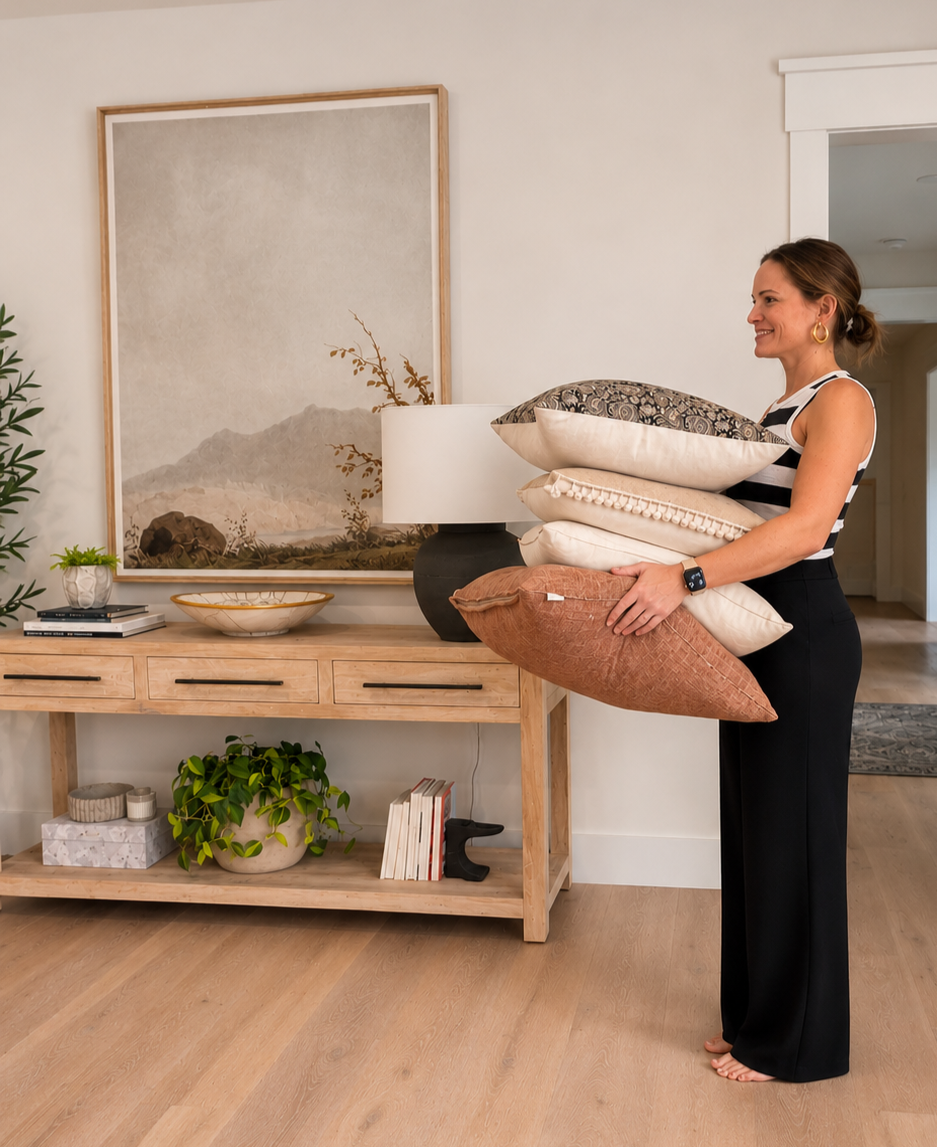
I don’t think of myself as a floral person, but apparently that changes when I’m shopping for pillows. Give me a big, quiet sofa and I’ll happily put a busy floral next to a stripe. It’s where I get to try the prints I’d usually walk right past.
Throw pillows were one of the first things I started spending real money on for our house. I remember looking at them in specialty shops and thinking, how on earth does a pile of pillows add up to that much? They’re just pillows. And yet they’re still one of the things I’m most willing to spend a little more on. A good pillow feels better when you lean against it, and the right mix can make a sofa you’ve had for years feel like it belongs in the room in a way it somehow didn’t before.
Most of my house is fairly quiet when it comes to colour. There’s a lot of cream, brown and black, and I’m generally happy to leave the big pieces that way. But I love a pillow with a pattern that stands out a little. It might pick up the brown in a piece of furniture or the black in a frame across the room. You probably wouldn’t walk in and think, That pillow matches that frame. You’d just feel like the two belonged in the same room. That’s what I love about pillows. They can pull together things you already own and give you somewhere to try a fabric or a pattern you might never choose for an entire sofa.
What I’d Spend Money on First
For me, it’s the insert. Wherever I’m shopping, I look for something really plush that gives a little when I lean into it. I tend to reach for goose feather and down inserts because I like that soft, full feel. Once you have a few inserts you love, you can keep using them as you find new covers. If you like changing things up with the seasons, a few folded covers are also a lot easier to store than a whole other set of pillows.
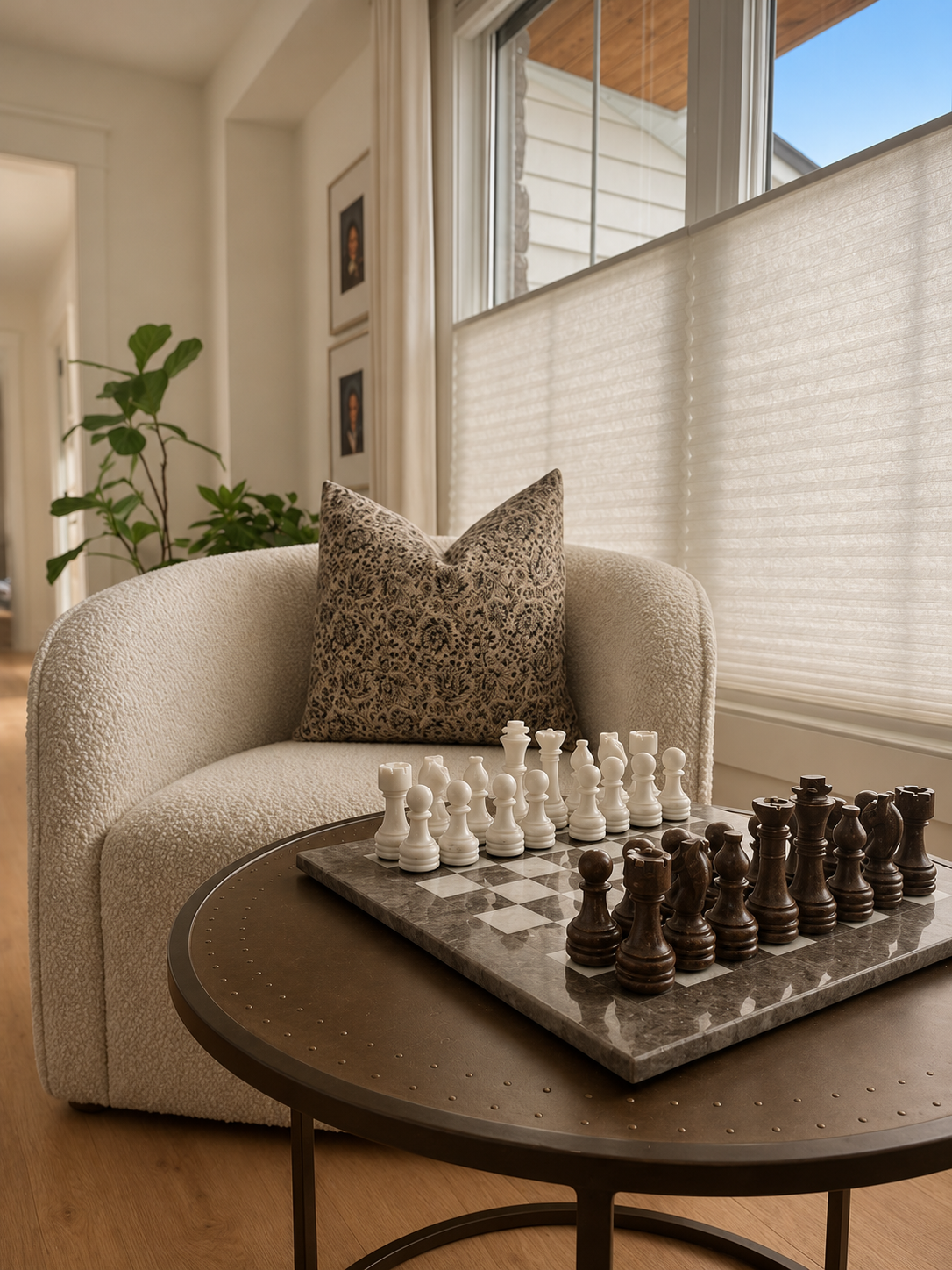
There are plenty of places to find affordable covers, and I’d happily put one on a good insert. If I’m spending more on a cover, it’s usually because the fabric brings something specific to the room. On my cream chair by the window, for instance, I like how one little floral makes the whole corner feel warmer. A slightly rumpled linen can soften the look of a heavier weave, and a little velvet can give a mix of creams and browns more depth. When I’m buying a cover and insert separately, I check what size insert the cover maker recommends so the pillow has the shape and fullness I’m after.
When the Sofa Comes with Matching Pillows
I have a bit of a thing about the matching pillows that come with some sofas, especially the ones made from the same fabric as the couch. I understand the appeal. You’ve just made about a hundred decisions buying the sofa, and here are two pillows ready to go. But when the pillows and the upholstery are identical, they tend to blend together. Try swapping them for a textured solid or a print that picks up a colour elsewhere in the room. The same sofa can suddenly feel much more like yours.
Pull Colours from the Room
Before I start looking at pillow covers, I think about which colours in the room I’d like to see a little more of. In my family room, the rug has these soft, washed-out blues that I like to pick up in the pillows. There are also a few black accents around the edges of the room, and bringing a little black onto the sofa carries that colour into the middle of the space. A big neutral sofa gives you plenty of room to do this. A pillow can pick up a blue you barely noticed in the rug or make you look twice at a colour in a piece of art. Once I’ve decided which colours I want to bring onto the sofa, it’s much easier to choose the patterns and fabrics.
Mix the Patterns and Textures

I love a sofa with pillows that look like I found them at different times, but I know how easy it is to bring home three covers you love and then wonder why they look so busy together. Once I know which colours I want to pick up, I choose one or two prints I really love. I’m always drawn to a busy botanical, especially anything with flowers and lots going on. That’s the pillow I’d pick early because it’s usually the hardest one to find company for. Once I’ve chosen the floral, I usually pull one colour from it and look for a geometric print in that colour. If the flowers have some brown in them, I might look for a fine brown stripe or a small grid. The straight lines sit nicely next to the looser shapes of the flowers, and using the same colour helps the two pillows feel like they belong together. I also like to play with how big the patterns are. If the flowers are large and spread out, I’ll try a fine stripe or a tighter grid beside them. The difference in scale makes it easier to take in both patterns when you look at the sofa.
Layer from Largest to Smallest
When it comes to putting the pillows on the sofa, I usually start with my largest one. I like a solid neutral at the back, often something in cream or oatmeal with a weave you can actually see and feel. That solid gives me something to build around and gives your eye a place to rest between the prints. From there, I work my way down in size and bring in more pattern as I go. The larger pillow gives the group some height, and enough of the smaller floral shows in front for you to see what made you love it in the first place.
A solid pillow can also be where you have a little fun with texture. I like details you can feel when you run your hand over the cover, like fringe along the edge, tassels at the corners or a little beadwork that sits up off the fabric. Even in a single colour, those details can make a pillow interesting up close.
How I’d Arrange Them on a Sofa or Sectional
On a standard sofa, I’d start with two pillows at each end. I like a 22-inch square at the back and a 20-inch square slightly in front of it. I might use the same solid on both ends and change up the smaller pillows, with a floral on one side and a stripe or a grid on the other. On a compact sofa, I’d try smaller squares and see how much room they leave when I actually sit down. If you’re still figuring out what fits around your sofa, I’ve also put together a guide to choosing the right size coffee table.
On my sectional, I have a 22 × 22-inch solid linen pillow at each outer corner, with a 20 × 20-inch patterned pillow in front of it. One end has a tasselled geometric and the other has a floral. In the middle, where the two sides meet, I start with a larger 24 × 24-inch pillow, then layer a 22 × 22-inch pillow and a short lumbar in front. I like the extra height in that corner and the way the little rectangular pillow sits in front of the squares.
A big sectional in one solid colour can feel like a lot of sofa, even when you love the colour. A few different textures and hits of pattern break up that long stretch of upholstery and make the whole thing feel a little lighter. I also think pillows are part of what makes a room feel cozy in the first place. You can sink into one or toss it aside if you want to stretch out. Either way, the couch looks like somewhere you’d actually want to spend an evening.
And on a Bed
On my king bed, I use three 24 × 24-inch pillows across the back, two 22 × 22-inch pillows in front of those, and one long lumbar across the front. The three larger squares fill out the width of the bed, and the long lumbar gives me a place to bring in a stripe, a small print or some texture. If you like fewer pillows, a long lumbar in front of a pair of shams can be enough. I’d decide how far to take it based on how many pillows I’m willing to pick up off the floor the next morning.
What Makes a Mix of Pillows Work
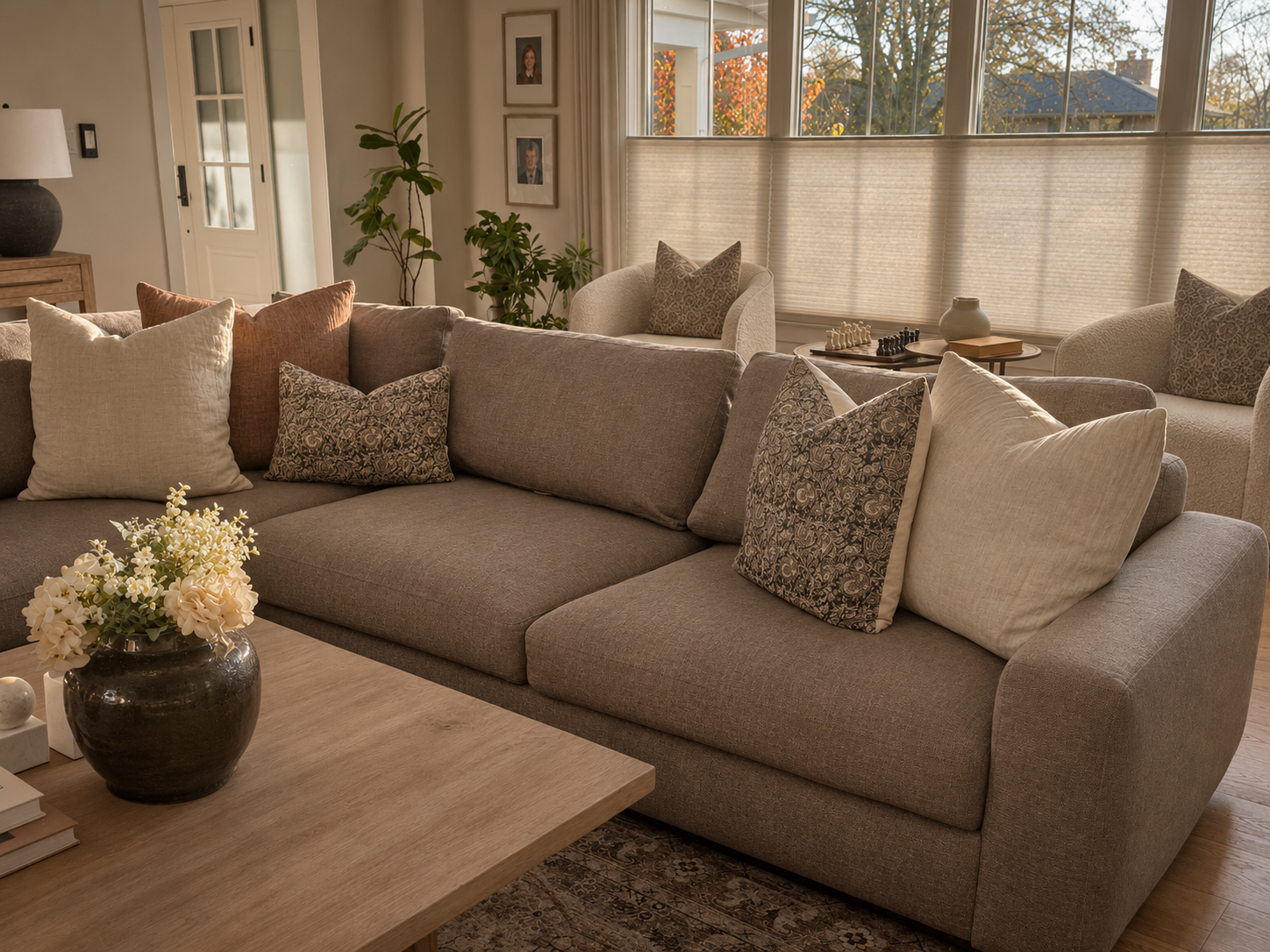
When I’m pulling a group of pillows together, I look for a colour I can carry over from the rug or a piece of art. I pick a floral I love, repeat one of its colours in a stripe or a grid, and give the prints some breathing room with a textured solid. Then I arrange them from biggest to smallest, with the larger solid at the back and the smaller prints where I can actually see them. If your sofa feels a little unfinished, you can try just one part of that. Put a patterned pillow beside a solid you already own and see what the two bring out in the room. Have a little fun with it. It’s only pillows.