
How to Choose the Right Size Coffee Table for Your Sofa
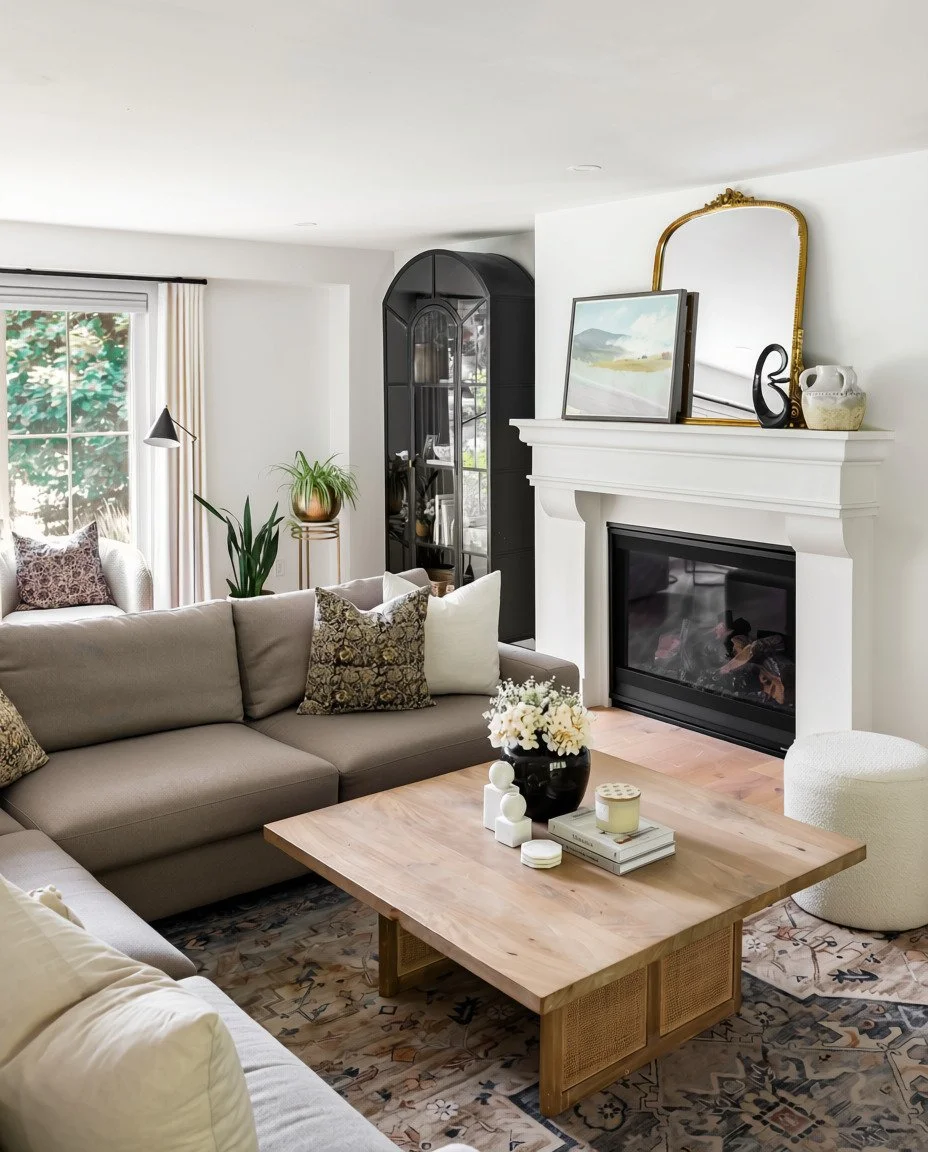
Our 42-inch square coffee table sits within a 115-inch L-shaped sectional—a good example of why overall sofa length is only one part of choosing the right coffee table size.
A coffee table is one of those pieces of furniture that can be surprisingly difficult to get right. You can spend months choosing a sofa, finding the right rug and figuring out the rest of the furniture, only to discover that the coffee table somehow feels too small, too large or just slightly off.
There are some well-established guidelines that can help. Coffee tables are generally sized in proportion to the sofa, should sit somewhere around the height of the sofa seat and need enough space around them for people to comfortably move around it. But after looking at those guidelines against the coffee table I landed on for our own family room, I think they're best treated as a starting point rather than a formula.
The shape of your seating arrangement matters. So does the visual weight of the table, the amount of open space in the room and, maybe most importantly, how you actually plan to use it.
Start With the Basic Coffee Table Sizing Guidelines
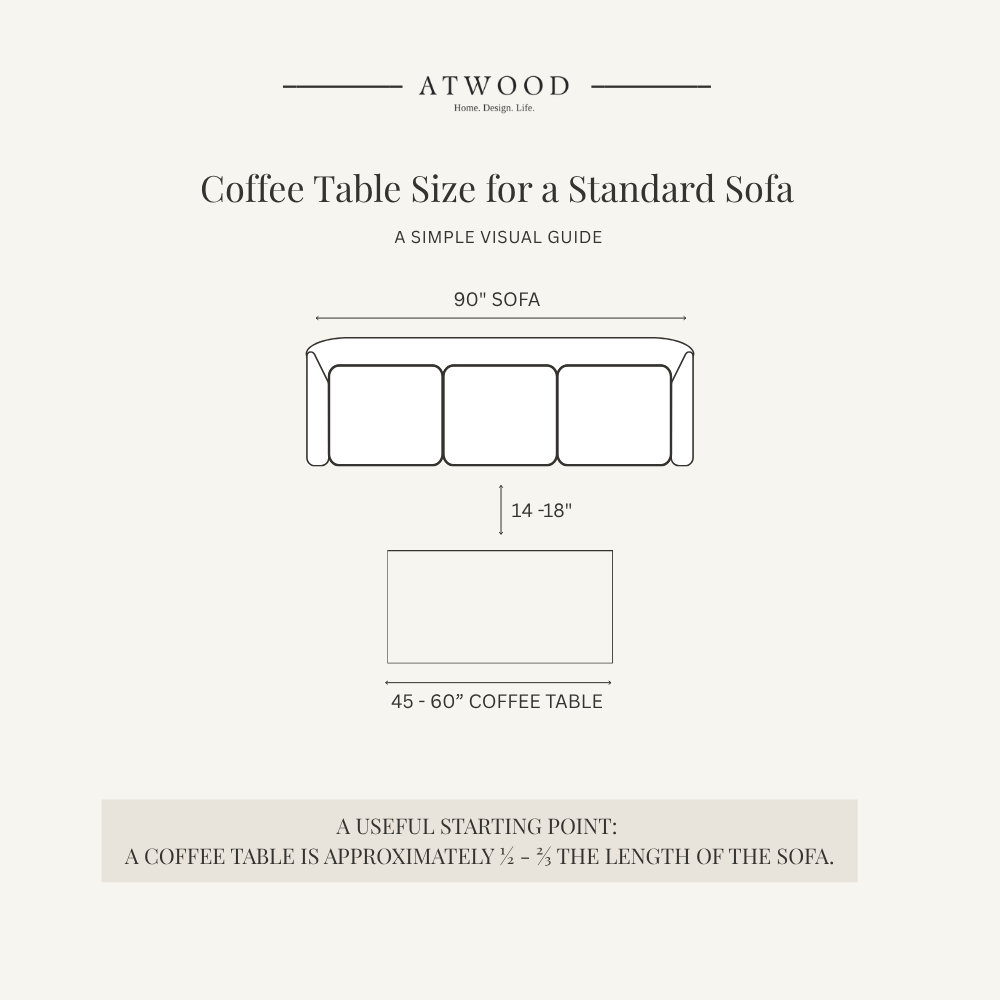
For a standard sofa, a common starting point is a coffee table somewhere around one-half to two-thirds the length of the sofa, with roughly two-thirds often used as a rule of thumb. Pottery Barn, for example, recommends a coffee table approximately two-thirds the length of the sofa. In terms of height, the table should generally sit at or close to the height of the sofa seat. Published furniture-sizing guides also generally recommend leaving somewhere around 14 to 18 inches between the sofa and coffee table — close enough that you can comfortably reach it, but with enough room to move around it.
Those measurements are useful because they immediately narrow what can otherwise be an overwhelming number of options.
For a straight sofa, the length guideline is fairly easy to apply. A 90-inch sofa, for example, would point you toward a coffee table somewhere in the range of approximately 45 to 60 inches long.
But sectionals are where things become a little more complicated.
With a Sectional, Consider the Open Space — Not Just the Sofa
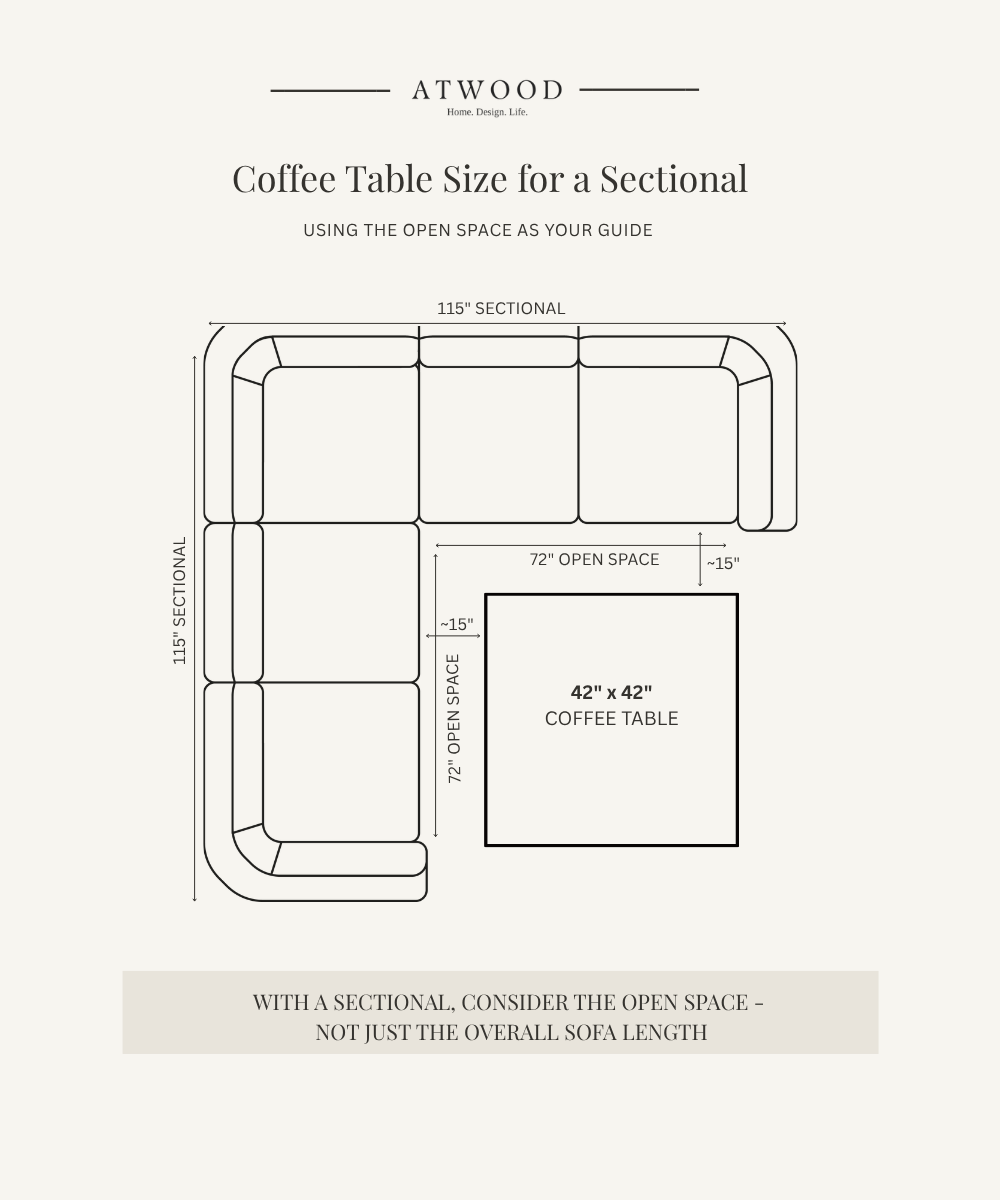
Our sectional is large: approximately 115 inches in each direction. If I simply applied the standard sofa-length formula to those measurements, I could easily conclude that we needed a very large coffee table.
We don't.
Our coffee table is 42 inches by 42 inches and square. What matters much more in our room is the open space created inside the L of the sectional, which is approximately six feet square. A 42-inch table centred within that area leaves roughly 15 inches between the coffee table and sectional on either side.
That happens to fall nicely within the commonly recommended clearance range, but more importantly, it works in the actual room. The table is close enough to reach from the sofa without crowding the seating or making it difficult to move around.
This approach is also consistent with coffee-table guidance for sectionals, which recommends considering the open or negative space created by the seating configuration. Crate & Barrel specifically suggests a square coffee table as a good pairing for an L-shaped sectional, while other design guidance recommends looking at the shape and dimensions of the open area created by the sectional rather than relying only on its overall length.
So while the one-half-to-two-thirds guideline is a useful starting point, I wouldn't apply it mechanically to the full length of an L-shaped sectional. I'd also look carefully at the open area created by the seating and choose a table that feels appropriately scaled within that space.
Don't Forget About Height
The seating of our sectional is approximately 16 inches high and our coffee table is about 17 inches high. They're essentially at the same level, which falls within commonly recommended coffee-table proportions. Guidance varies slightly, but generally keeps the tabletop close to sofa-seat height.
Crate & Barrel, for example, recommends keeping the coffee table no more than three inches below or one inch above the sofa seat, while Pottery Barn recommends approximately the same height as the seat cushion or slightly lower.
I wouldn't worry about an inch one way or the other. What you're trying to avoid is a table that feels noticeably too high or so low that it's awkward to actually use.
Round, Square, Rectangular or Oval?
Once you've narrowed down the size, shape is another way to make the coffee table relate to the furniture around it.
A rectangular table is a natural fit with many traditional straight-sofa arrangements because its proportions follow the length of the sofa. An oval table can accomplish something similar while softening all of those straight lines and eliminating sharp corners.
Round tables can work particularly well when you want to soften a room filled with angular furniture, or where easier movement around the table is important.
And a square coffee table can be a particularly natural fit within an L-shaped sectional when the open area created by the sectional is relatively square. That's exactly what happens in our family room. Our 42-inch square table relates to the shape of the space inside our sectional rather than to the sectional's overall 115-inch dimensions.
The right shape isn't necessarily determined by a rule. I'd look at the shape created by the furniture you already have and think about what would balance it.
Measurements Aren't Everything
Once you've established the approximate dimensions that will work, I think this is where choosing the actual table becomes much more interesting.
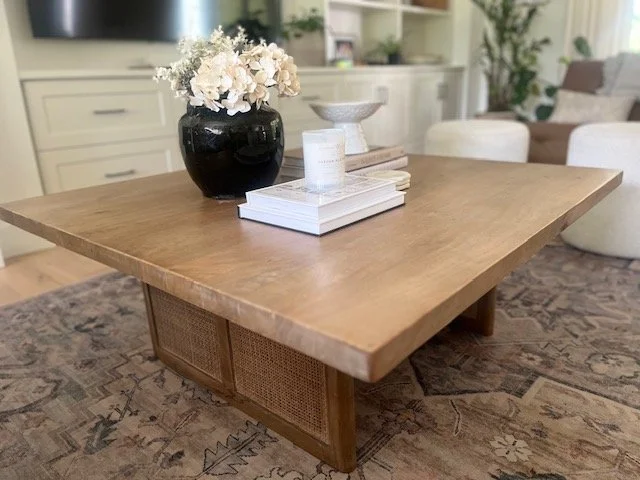
Two coffee tables with exactly the same measurements can have completely different visual weight. A substantial solid-wood table can feel much larger than a glass table with slender legs. Colour, material, shape and whether you can see through or underneath the table all affect how much visual space it seems to occupy.
For our family room, I knew I wanted wood because I wanted the warmth it would bring to the room. I also knew I wanted to incorporate rattan. The sides of our table have a woven rattan detail that adds texture, which is something I tend to look for in otherwise fairly neutral spaces.
So while size and proportion helped narrow the options, they weren't what ultimately made me choose this particular table. It also had to contribute something to the room.
Think About What Actually Happens Around Your Coffee Table
This may be the most important consideration for me.
Our family room is not a formal room. Sometimes the coffee table is styled and looks lovely. Other times everything gets cleared off because we're playing a game around it. People put their feet up. Snacks get spread out, and sometimes there are a few different plates or trays of food being moved around the table. Needless to say, we actually use it for real life so it needed enough surface area to actually be useful to us.
That affected my decision just as much as whether the table met a particular design guideline. A smaller table might technically have worked in the space, but I wanted enough room for the way our family actually uses this room.
I also knew that whatever coffee table we chose was going to get used — a lot. Ours is wood, and over time it has accumulated scratches and little dings. There was probably a time when those would have bothered me more than they do now.
I've come to accept that this is what happens to furniture that gets used every day. I want us to gather around this table, play games on it, put our feet up and use it without constantly worrying about damaging it.
Someday we may replace it. For now, the scratches and dings are simply part of its life in our house — and, in a small way, part of what makes the house feel like home.
How to Tell If Your Coffee Table Is the Wrong Size
Even after you've taken all the measurements, sometimes the easiest test is simply to look at the room and use the table for a while.
A coffee table may be too small if it looks stranded in the middle of the seating area, is difficult to reach from the sofa or chairs, or doesn't provide enough surface area for the way you use the room. Conversely, a table may be too large if people have to manoeuvre around it, if it crowds the seating or if it visually dominates everything around it.
This is also where visual weight matters. A table can technically fit the measurements and still feel too large or too small once you see it with the rest of the furniture.
The numbers get you into the right range. Your eye — and actually living with the room — still matters.
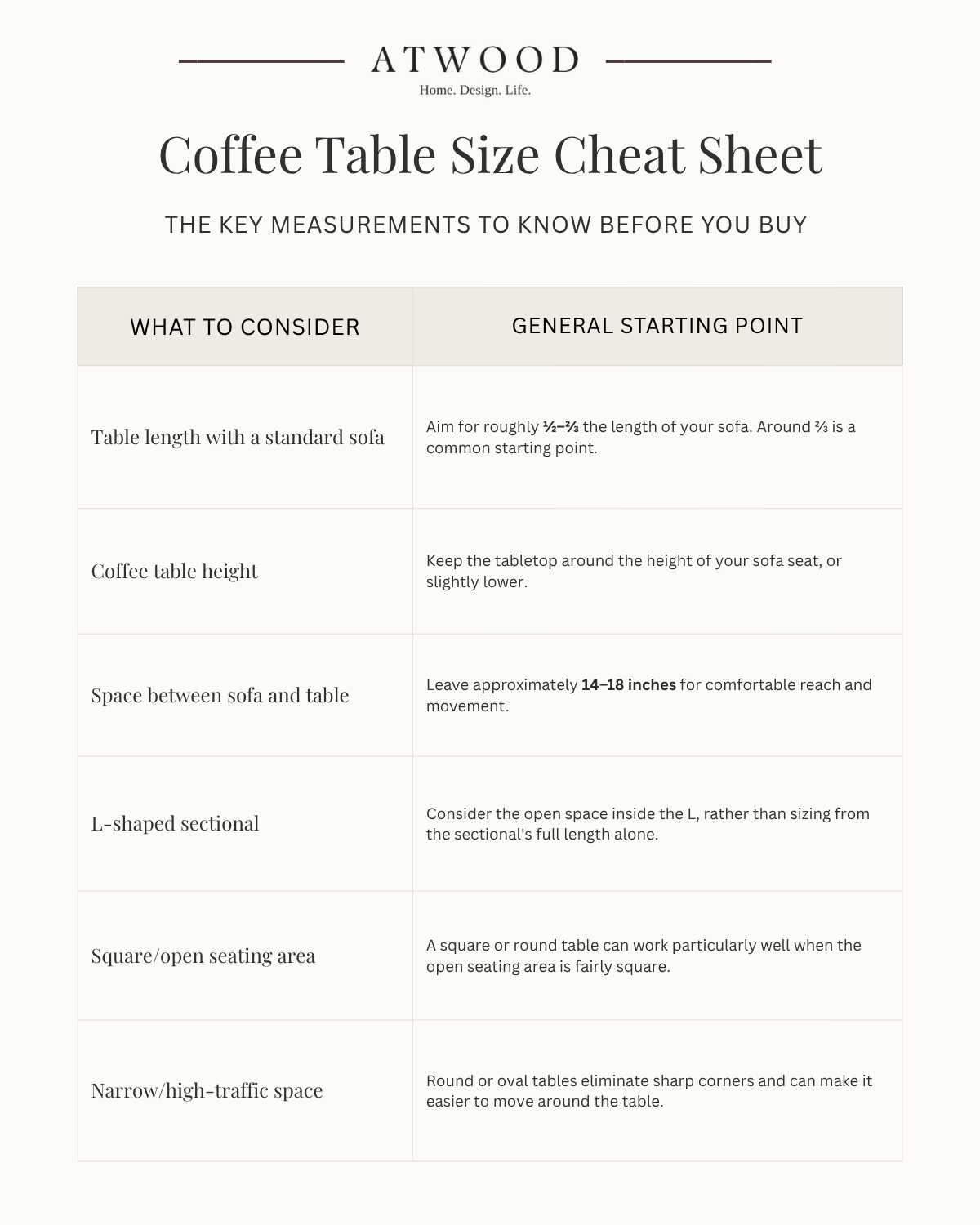
A Simple Coffee Table Size Cheat Sheet
If you’re trying to narrow down the right coffee table for your space, these are the basic measurements and proportions I’d keep in mind. Think of them as a starting point rather than hard-and-fast rules—the shape of your seating area and how you actually use the room matter too.
Use the Guidelines, Then Look at Your Room
I would absolutely measure before buying a coffee table. The basic sizing guidelines are useful, especially when you're trying to narrow dozens of options down to a reasonable size and shape.
But I wouldn't let the measurements make the entire decision.
I'd also look at the visual weight of the table, the shape created by your seating, the materials already in the room, how people move through the space and what you actually want to do around the table.
For us, that ended up being a 42-inch square wood-and-rattan coffee table inside a much larger 115-inch-by-115-inch sectional. On paper, the sectional measurement alone might have pointed me toward something considerably bigger. Looking instead at the approximately six-foot-square opening, the 15 inches of clearance, the height of our sofa and the way our family uses the room led us somewhere different.
And that's ultimately how I think design guidelines are most useful: as a starting point for making a decision that works in your own home.